November 9, 2026 |
How Does Alimony Work in Illinois? 2027 Guide


 RJSR

In Illinois, alimony is called maintenance. A court does not begin by automatically applying a formula. It first decides whether maintenance is appropriate. Only after making that decision does the court determine the amount, duration, and type of maintenance, using statutory guidelines when they apply.
This guide explains the current framework for people preparing for a divorce in 2027. Illinois can update legislation and the standardized income-conversion tables used in support calculations, so any 2027 calculation should use the law and official table in effect when the case is evaluated. For an educational estimate, use RJSR’s Illinois Maintenance Calculator.
A spouse seeking maintenance should raise the issue during the divorce or legal-separation case. Maintenance can be requested in the pleadings, and the court may consider temporary maintenance while the case is pending.
Both spouses ordinarily must provide financial information. Useful records include recent tax returns, pay stubs, bank and investment statements, retirement-account records, business records, evidence of recurring expenses, and information about any existing support obligations. Accurate records matter because the court’s analysis depends on the parties’ actual financial circumstances.
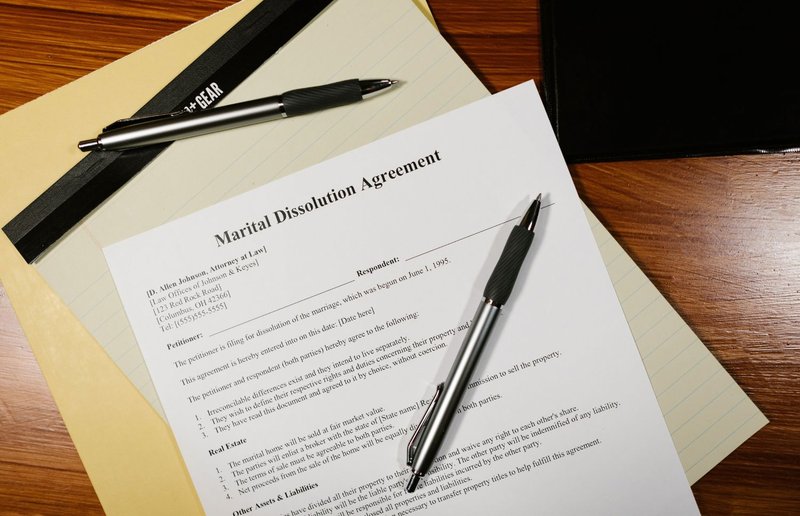
Under Section 504 of the Illinois Marriage and Dissolution of Marriage Act, maintenance may be awarded to either spouse without regard to marital misconduct. A substantial income difference can be important, but it does not by itself guarantee an award.
The court considers all relevant circumstances, including:
If the court finds maintenance appropriate, the statutory guideline generally applies when the spouses’ combined gross annual income is less than $500,000 and the payor has no obligation to pay child support, maintenance, or both from a prior relationship. The court can use a non-guideline award when application of the formula would be inappropriate.
The guideline amount is calculated as:
33⅓% of the payor’s net annual income minus 25% of the recipient’s net annual income.
The result is subject to a cap: after maintenance is added, the recipient generally may not receive more than 40% of the spouses’ combined net income under the guideline calculation.
Illinois uses statutory net income, not simply the amount deposited in a paycheck. Standardized calculations rely on an official gross-to-net conversion table, while an individualized tax calculation may be appropriate in some cases. Illinois has been updating the standardized table annually, so a 2027 calculation should use the table then in effect. RJSR’s maintenance calculator identifies the table and assumptions it currently uses.
For a marriage lasting less than 20 years, guideline duration is calculated by multiplying the length of the marriage when the case was commenced by the statutory factor for that marriage-length range. The factor begins at 20% for marriages under five years and increases by four percentage points for each additional year range, reaching 80% for marriages of at least 19 but less than 20 years.
For a marriage lasting 20 years or more, the court may order maintenance for a period equal to the length of the marriage or for an indefinite term. Marriage length affects duration, but it does not establish eligibility by itself.
For the complete duration table and examples, see How Long Does Alimony Last in Illinois? The Illinois Maintenance Calculator also estimates guideline duration from the marriage and filing dates entered.

The judgment should identify the form of maintenance being awarded:
A court may also order temporary maintenance while the case is pending. A settlement agreement can establish different terms and may make maintenance nonmodifiable. The precise language of the judgment and marital settlement agreement is therefore critical.
Unless maintenance has been made nonmodifiable by agreement, a substantial change in circumstances may support modification. A court can consider good-faith employment changes, changes in income or property, earning capacity, the recipient’s reasonable efforts to become self-supporting, the duration of payments, and other statutory factors.
Maintenance may terminate earlier than expected. Unless the parties agree otherwise, Illinois law generally provides for termination upon the death of either party, the recipient’s remarriage, or a finding that the recipient is cohabiting with another person on a resident, continuing conjugal basis. A person should not simply stop paying based on an assumption that circumstances have changed; the order and the required court procedure need to be reviewed.
Our Post-Decree Proceedings page explains more about enforcement, review, and modification after a divorce judgment.
For divorce or separation instruments executed after 2018, maintenance generally is not deductible by the payor and is not included in the recipient’s federal taxable income. Different rules may apply to instruments executed before 2019 and to certain later modifications. The IRS guidance on alimony and separate maintenance explains the federal distinction.
RJSR’s Illinois Maintenance Calculator estimates guideline amount and duration using the income information and dates entered. It is an educational starting point, not legal advice or a prediction of a court order. The result may not apply when income exceeds the guideline threshold, a prior support obligation exists, an individualized tax calculation is needed, or a court finds that the guidelines would be inappropriate.
Learn more on our Illinois Alimony and Maintenance page, or contact RJSR to discuss how maintenance may apply to your circumstances.